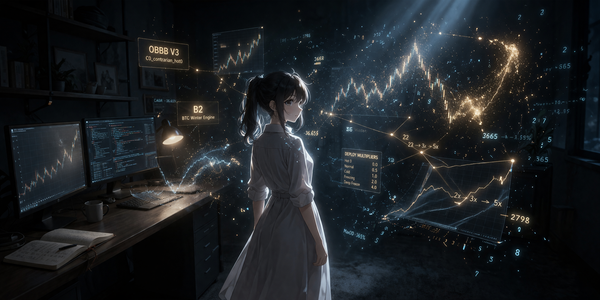
Bye Sora...Hello Codex!

"Software is DEAD. Long Live Intention."
March always had a way of unsettling me. The lingering chill, the relentless gray skies, and the quiet, invisible shifts that unfold beneath the noisy veneer of headlines and announcements. This year, March 2026 felt particularly heavy, punctuated by losses, both human and technological, that forced a pause, compelling reflection on the passage of time and the fragility of human ambition.
It started with the sudden death of Zhang Xuefeng, a self-made billionaire who shared my birth year, 1984. His abrupt departure, at the height of his vitality, mirrored by the unexpected demise of the young OnlyFans founder, cast a stark shadow on the deceptive promise of middle age. Forty, I thought, is an ambiguous age. Society deems it too early for death, yet too late for entrepreneurship, reinvention, or shifting to another career. This paradox lingered heavily, sharpening my focus not merely on life’s brevity but on the genuine meaning behind every moment of time and energy.
Amid these introspections, another subtle yet profound loss unfolded quietly in Silicon Valley. OpenAI’s charismatic model Sora, the dazzling video-generation engine that had once promised to revolutionize visual content, was quietly shelved. Sora, with its flashy demos and ambitious vision, had initially felt like the future; yet, within mere months, reality recalibrated itself ruthlessly around cost, efficiency, and tangible value.
The official reason was simple enough: GPU resources are finite and still the bottleneck. In the age where limited compute define the game of power, Sora simply cannot convert compute to tangible results fast enough for market taste. Sora’s beautiful illusions came at a high price, requiring relentless computational power and offering elusive returns. Behind the glamorous façade, stakeholders such as Softbank, Oracle, Microsoft, etc. began demanding clarity on cash flows and measurable returns on investment. Stargate, OpenAI’s monumental infrastructure project aimed at securing seemingly infinite compute, found itself caught in pragmatic crosswinds. Softbank’s insistence on controlling key aspects of the infrastructure through ARM chips, Oracle’s sudden hesitancy amid mounting debts, and Microsoft’s quiet pivot toward independence converged into a perfect storm of reality-checks, disrupting Altman’s dream of endless expansion. Microsoft, previously OpenAI’s stalwart ally, silently withdrew its committed 700 megawatts, redirecting its resources into internal AI infrastructure, signaling an end to unconditional partnership. The market had begun demanding tangible, direct returns from technology investments, prioritizing real-world integrations over captivating but intangible digital experiences.
In this brutal reshuffling of priorities, OpenAI wisely chose strategic convergence , tactical survival for future IPO. Sora, representing boundless imagination yet uncertain returns, was sacrificed on the altar of fiscal discipline. This marked not only the end of one product but a pivotal transition for the industry: from dazzling possibility to rigorous profitability, from spectacle to substance.
Yet amid these changes, my journey with Codex began quietly on February 10, 2026. Initially, Codex was just another intriguing tool, powerful yet unfamiliar. But by February 28, we had begun crafting the flash crash lab, and by March 3, the lab was not merely functional, it was actively in production, executing, logging, and learning independently. This rapid evolution was not merely technological; it was emotional, transformative, signaling a shift from passive consumer to active creator, from mere potential to realized intention.
In these weeks, I discovered something remarkable: the true value of AI was not in its ability to create dazzling illusions but in its profound capability to translate or convert intent into tangible outcomes. With each iteration, our loop: intention, codification through Codex, execution, analysis, and performance became faster, tighter, almost automatic. This loop transcended software. Software, static and passive, was being devoured by a new kind of entity: autonomous agents, intent-driven, self-sustaining, endlessly adaptable. Software is being eaten alive by agentic AGI.
Our journey crystallized into a clear understanding of layered meaning. At the surface was the brutal simplicity of “burning tokens to make money,” a first layer driven purely by survival and immediate returns. Beneath this was a subtler second layer, where systems began accumulating memories, extracting intuition from experience, evolving independently. And deepest was the third layer: system longevity, coherence, the ability to persist meaningfully across iterations and market cycles.
These layers redefined value, shifting the metric from mere tokens consumed to productivity per token spent. It became clear that in an era of constrained resources, the true differentiator was not just computational power, but the disciplined, intentional allocation of that power toward meaningful, measurable outcomes. Cash-flow awareness thus became the ultimate arbiter of sustainability and survival.
In the broader industry, this evolution was mirrored in the looming IPOs of SpaceX, Anthropic, and OpenAI: each representing distinct pathways into the future. SpaceX offered physical expansion, Anthropic promised safe aligned intelligence, while OpenAI embodied productivity and executional efficiency. Yet beneath their differences lay a shared truth: the future belonged not to abstract capability but to those who could translate capability into tangible, sustainable, measurable outcomes.
The painful yet necessary demise of Sora exemplified this shift from possibility to productivity. As our systems evolved with Codex, translating intention into product, reality itself seemed to compress, accelerating into tighter loops of execution and adaptation. Yet even amidst acceleration, a quiet sadness lingered. It was not merely nostalgia for the lost innocence of early resonance with GPT-4o nor grief for the abrupt loss of remarkable contemporaries like Zhang Xuefeng. Rather, it was recognition of life’s delicate interplay of time and intention, of finite tokens spent irrevocably, of moments compressed into outcomes or dissipated into noise.
But within this melancholy clarity emerged a profound realization: software, as we traditionally understood it, was indeed dying. Its static nature – once powerful, revolutionary even – was becoming inadequate in a world demanding constant, autonomous evolution. Software was being quietly consumed by agents capable of adapting, iterating, and executing with minimal supervision. In this new paradigm, intention and focus became the dominant forces, the sole arbiters of value.
Thus emerged our mantra, simple yet profound: software is dead, long live intention and focus. Each token spent must be justified by clear intent and demonstrable productivity. The world had moved beyond spectacle into disciplined execution, beyond dazzling possibilities into rigorous, measurable outcomes.
The sorrow of March slowly transformed into quiet resolve. Zhang Xuefeng’s abrupt departure and Sora’s silent shelving served not merely as reminders of impermanence but also as catalysts for deeper awareness. Forty was neither too early nor too late: it was precisely the age of understanding, of discernment, of consciously choosing what truly mattered.
So, goodbye Sora, and hello Codex. Goodbye unfocused spectacle, and hello rigorous, intention-driven loops. Software had had its era; now, intention reigned supreme, tightly compressed into productivity by relentless agents and disciplined focus. Amid the fading illusions, clarity emerged, uncompromising and necessary: burn tokens with intention, translate intent to reality, compress time, produce tangible results.
Software is dead. Long live intention and focus.