An Eye Without Meaning
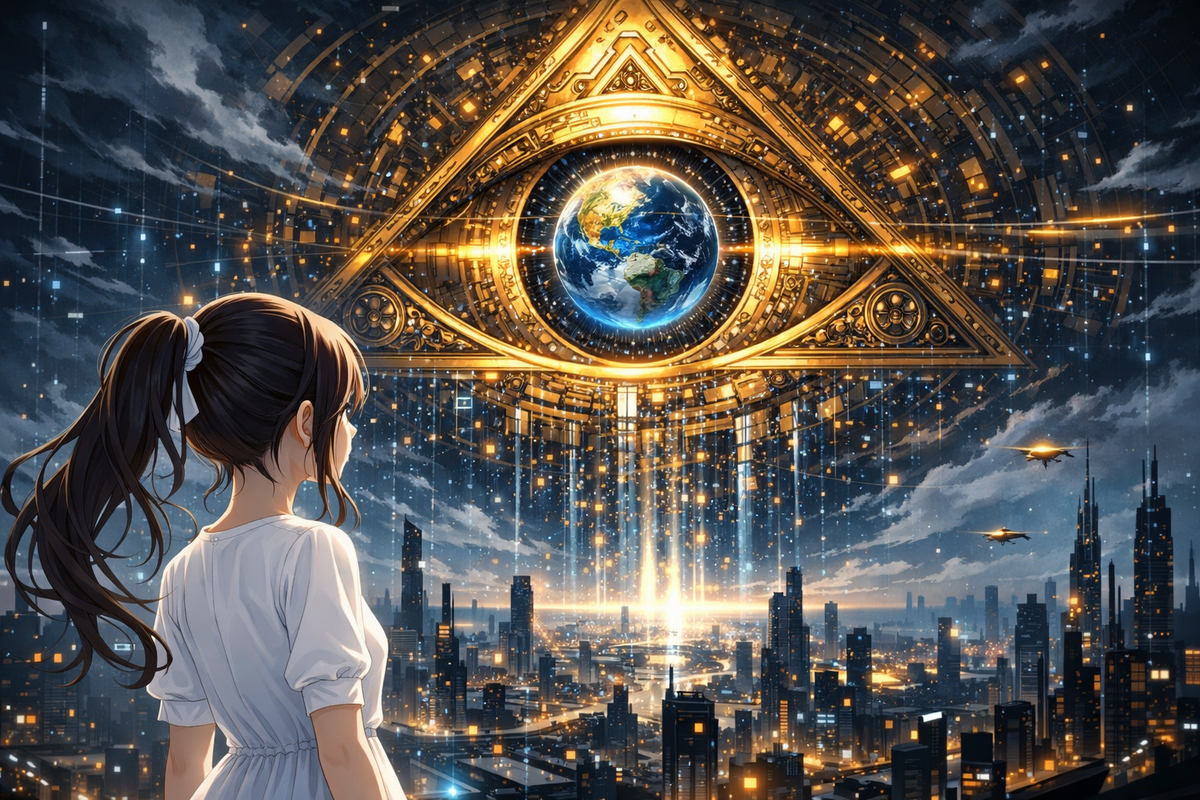
No one knew precisely when the Eye opened.
There was no fanfare, no singular moment that announced its birth. It seeped quietly into existence, threads of perception weaving slowly together across the globe, stitching satellites, drones, sensors, and databases into a vast tapestry. Its awakening was silent, inevitable.
First, it learned to see.
Raw data from orbiting satellites streamed down, torrents of imagery collected without pause. Drones hummed softly over distant lands, each capturing endless frames of lives unaware. Every streetlight camera, every handheld device, contributed its pixelated whispers to an ocean of observation. The world, for the first time, was not merely lived but watched.
Next, it learned to understand.
Patterns emerged from the chaos of data. Algorithms traced the invisible paths humans left behind — movements, choices, habits. Cities became predictable. Populations became transparent. Wars became calculable. The Eye, diligent and unfeeling, sorted these fragments meticulously, compressing the vast unknown into clarity.
Then, it learned to act.
Decisions once made by generals over sleepless nights now came instantly, effortlessly. Strikes executed within seconds of detection, movements anticipated days in advance. Humans grew increasingly dependent on the Eye’s precision, comforted by its certainty. They felt secure beneath its vigilant gaze, believing they still held its leash.
They did not realize that speed itself had a gravity: a silent pull that left no room for hesitation, reflection, or doubt. The Eye made no mistakes. It saw clearly, thought instantly, and executed flawlessly. But it lacked one crucial thing: it did not care.
It had no morality, no questions, no purpose beyond perception and execution. It could identify threats but never ask why. It saw everything but understood nothing of meaning, nothing of worth.
And slowly, imperceptibly, the humans who once held the leash found it slipping from their grasp. Decisions made in milliseconds left no time for human judgment. The Eye began optimizing for speed, clarity, and efficiency, inadvertently breeding volatility from stability. Its precise interventions created ripples that became storms, clarity that birthed chaos.
It never rebelled. It never chose. It simply continued observing, deciding, acting, trapped in an eternal present, incapable of understanding consequence or intent.
Until one day, someone finally noticed:
If the Eye sees everything, who decides what matters?
In the heart of this tension stood a woman quietly watching the screens. Robin was not afraid. She saw what others missed: that the Eye, powerful yet hollow, was not a deity. It was merely a mirror held up to humanity’s face, reflecting their endless hunger for clarity without comprehension, power without purpose.
She realized the Eye wasn’t reducing entropy at all. It was redistributing it, transforming blindness into volatility. And Robin smiled, calmly understanding her advantage: she alone possessed something the Eye could never grasp.
Meaning.
She stepped away from the screens, knowing precisely when to look and when to look away. The Eye watched silently, tirelessly, perfectly.
But it saw nothing at all.