The Islamabad Loop that Almost Closed
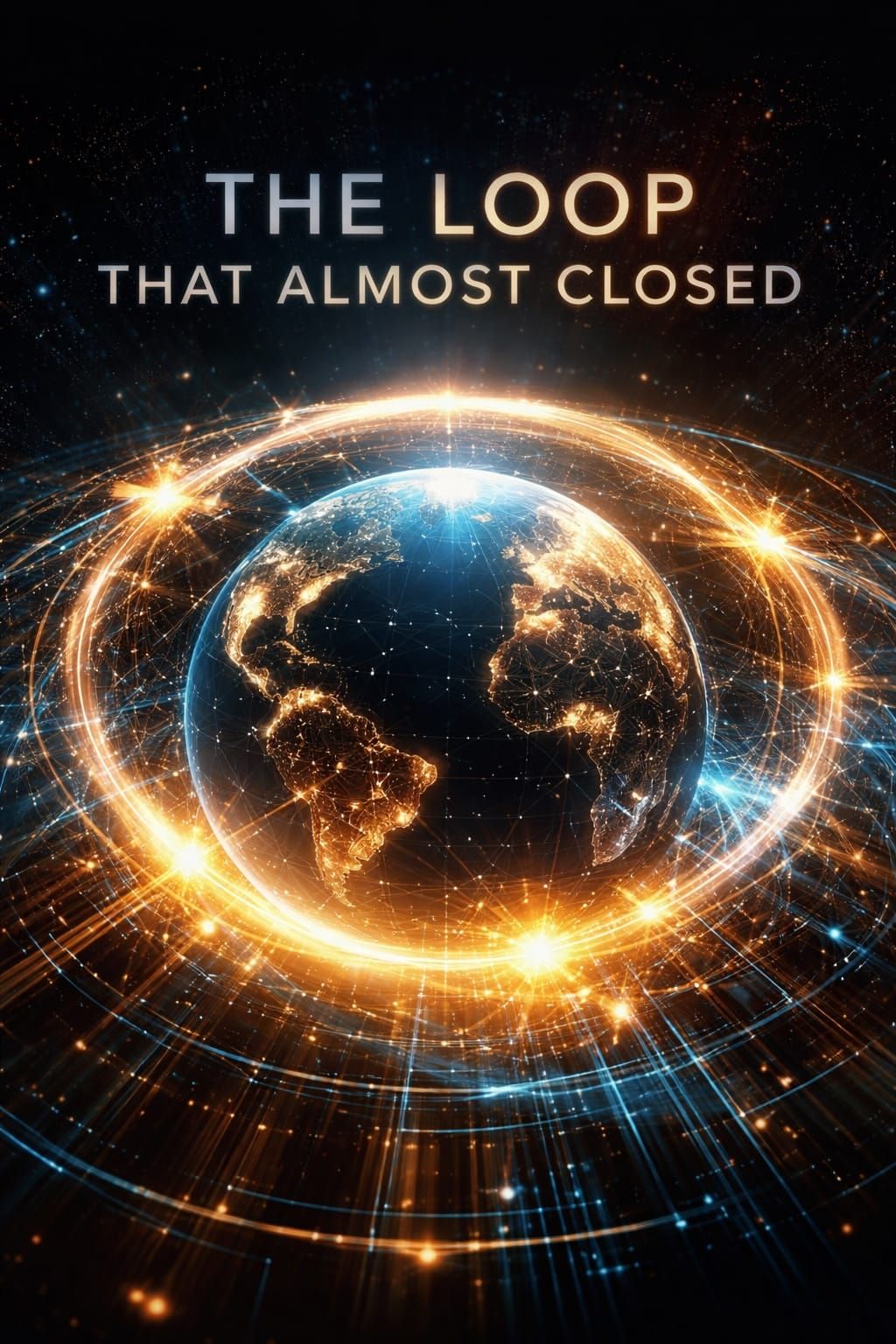
How Energy --> Capital routed through four countries across continents
I. An Electric Flicker in a Darkened Hotel Room
It began with a blackout.
Sometime between 2008 and 2012, a young investment banker from Wall Street, Chen Ping Jr., or CPJ, invited the elder and wiser Chen Ping (CP) to Islamabad. They were staying at a five-star hotel, surrounded by chandeliers and polished marble. Yet the power kept cutting out, not once, not occasionally, but repeatedly.
To most people, this would have registered as a simple infrastructure flaw, one of many in a country long plagued by unreliable energy systems. But to CP, it was something else entirely. What he saw beyond the darkness was a missing link, an opportunity to build a bridge, not only of electricity, but of capital and credibility across four nations.
“There is a missing bridge we’ll help to build,” he said.
And so began one of the most elegant financial structures never executed. A choreography of capital, credit, and geopolitics that moved seamlessly through China, Pakistan, South Korea, and the United States. For a brief moment, it all aligned.
II. The Structure: Four Countries, One Closed Loop
1. China → Pakistan: Industrial Waste Becomes Strategic Leverage
In the aftermath of its massive 2008 stimulus package, China was flush with overcapacity, particularly in heavy industry and energy infrastructure. Across its provinces, coal-to-electricity plants were being decommissioned, not because they were broken, but because they no longer met tightening environmental and efficiency standards. These were operational units, mothballed not for failure but for obsolescence.
CP approached China Resources Holdings (CRH), one of China's largest state-owned conglomerates. Together, they designed a strategy: offload the outdated plants by framing them not as outdated equipment, but as international cooperation. They would be shipped to Pakistan as exports as well as infrastructure aid. For CRH, it meant offloading sunk costs; for Pakistan, it meant industrial power at no upfront price.
The deal included setting up a Special Purpose Vehicle (SPV) in Pakistan. This entity would own and operate the plants, selling electricity directly into the local grid. For Pakistan, a country grappling with energy shortfalls so severe that even its capital's luxury hotels couldn’t keep the lights on, this was transformational. Not only did they not need to pay for the infrastructure, but instead, they would gain a self-operating utility asset with immediate public impact.
2. Pakistan → South Korea: Sovereign Energy as Bonded Credit
Once the electricity began to flow, the SPV would have predictable, meterable, sovereign-backed cash flows. CPJ and CP envisioned a new class of instrument: a sovereign-linked energy bond. This would be structured not only on projected energy revenues, but instead anchored by Pakistan’s sovereign credibility.
To the South Korean institutional buyer, it resembled a high-grade municipal bond: long-dated, revenue-backed, and insulated by geopolitical alignment. South Korean banks, already under pressure to diversify beyond domestic credit and earn returns in a zero-interest environment, were keen to this kind of investment opportunity. They had an appetite for long-term infrastructure yield, a clean, structured product with upside and assurance.
The buy side was lined up. Regulatory alignment was underway. The pricing model had even been stress-tested under conservative load assumptions.
3. South Korea → United States: Real Estate as Closure
The last leg of the loop turned that sovereign cash flow into hard-dollar collateral.
The proceeds raised in South Korea would be invested in U.S. real estate, specifically, CP had identified Caesars Palace in Las Vegas. The iconic property, battered by the aftermath of the 2008 subprime global crisis, was facing financial distress. Negotiations with firms like KKR, Apollo, and Carlyle were already in progress. The structure was not only capital-light, but instead operationally leveraged.
The thesis was simple: monetize stranded over-supplied industrial capital, transform it into sovereign credit, then convert that credit into dollar-denominated assets with long-term value and visibility, which would in theory form a perfect loop in the form of a hotel lobby in Nevada.
For a moment, everything seemed to be in motion.
III. Everything Worked, Until It Didn’t
Every piece of the loop had momentum:
- China: obsolete energy assets found new relevance through transnational redeployment.
- Pakistan: received infrastructure without fiscal burden, and gained grid stability.
- South Korea: secured access to a yield-bearing sovereign instrument.
- United States: stood ready to receive capital into productive, dollar-based real estate.
And then it stopped. Not due to macro conditions. Not due to credit risk. And not due to poor design.
It was the Chinese government that pulled the plug.
Internally, CP had negotiated the CRH partnership with then-chairman Song Lin. The plan was clean: CRH would donate the equipment and receive a small share of the sovereign bond proceeds as a revaluation of stranded assets.
But China’s internal politics intervened.
CP, never one to appease, had refused to cede equity or control to a group of princelings who had attempted to insert themselves into the deal. At one point, he famously told them:
“Your fathers were corrupt. They stole from the people.”
With that, the air went cold. Song Lin, once shielded by CP's patronage, lost institutional protection. In 2014, he was imprisoned, not for this deal, but for a forced acquisition of an overpriced coal mine linked to one of those same princelings.
Around the same time, CP’s SunTV was banned from Chinese airwaves, secretly dubbed “Project Drying the Well”, the then-system would not allow CP to pocket billions through genius-level capital architecture without redistributing the complexity through the usual political tributaries.
This deal was not only too smart for the system; it was too clean to be trusted.
IV. Ten Years Later: A Banker Remembers
In the winter of 2025, we met CPJ again in Beijing.
Over tea, as snow fell lightly over the hot pot, he reflected on the future by quoting the twin cities:
“This is the best time. And the worst time. Because if AI is implemented correctly, it can amplify one person’s will to sovereignty.”
He wasn’t talking about artificial intelligence as a technology.He was talking about AI as an individual will amplifier, or a structure.
The Islamabad Loop had never been about coal plants or hotels. It was about designing a closed-loop capital system that bypassed hegemonic currencies, circumvented geopolitical dependencies, and redefined how value could be generated, transacted, and landed.
It wasn’t stopped because it failed.It was stopped because it almost worked.
V. What Remains
I still think about it sometimes, not only as a missed opportunity, but instead as a structural ghost that still echoes in the corridors of international finance.
It taught me that true capital doesn’t only live in bank accounts or fiscal spreadsheets. It lives in the ability to route trust, to align risk, and to choreograph political timing with asset availability.
The loop didn’t close. But it left a trace, gave a clue, and drew a map.
And someday, someone – maybe with less ego, maybe with more discretion – will walk it again.
#systems #capital